

10 Best Free Virtual Science Museums for Kids in Singapore
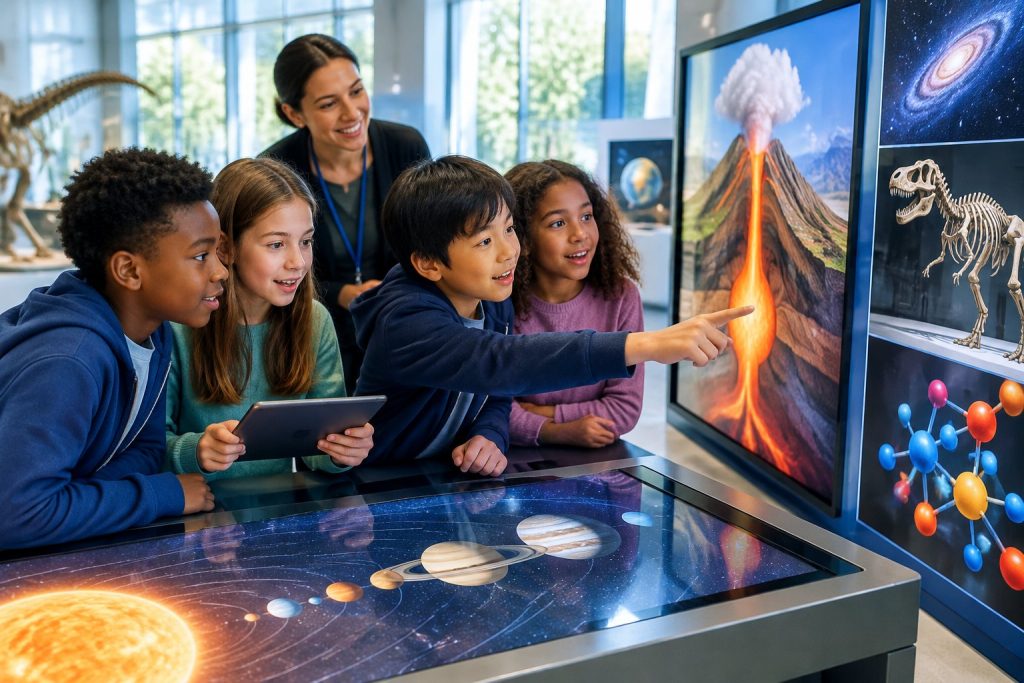
A free afternoon and a laptop can turn into a trip through a dinosaur hall, a coral reef, or a NASA wind tunnel without leaving the kitchen table. The Smithsonian National Museum of Natural History’s narrated virtual tours stand out as the strongest starting point for most families, because they let kids move hall by hall through real exhibits, from fossils to gemstones, with no admission fee and no sign-up required.
That said, a single museum rarely holds a child’s attention for long. Rotating between a navigable museum tour, a live animal cam, and a hands-on experiment keeps the novelty alive, which is why this list treats virtual museum tours for kids as one tool among several rather than the whole plan.
Some of the destinations below are proper museums with rooms to wander. Others are live cameras, research center tours, or activity hubs that teach through play rather than through a guided walk. Knowing which is which helps a parent pick the right one for a rainy Tuesday versus a rainy week.
Which Science Museums Can Kids Explore for Free?
Five institutions offer genuinely free, child-friendly ways to explore exhibits from home: the Smithsonian National Museum of Natural History, the Exploratorium, the Field Museum, the Natural History Museum in London, and the Boston Children’s Museum. Each takes a different approach, from narrated hall-by-hall tours to downloadable hands-on activities, so the best fit depends on whether a child wants to look, do, or play.

Smithsonian National Museum of Natural History: Explore Exhibits Room by Room
The Smithsonian offers narrated video tours through several of its most popular halls, including the David H. Koch Hall of Fossils (Deep Time), the Hall of Human Origins, the Hooker Hall of Geology, Gems, and Minerals, and the Sant Ocean Hall. Each hall has its own playlist, broken into short segments like “Dinosaurs in Detail” or “Mass Extinction Events,” so a child can watch one five-minute clip rather than committing to a full hour.
Good for: kids ages 7 and up who enjoy a guided, documentary-style walkthrough.
Try this after: ask the child to pick one fossil or gem from the tour and sketch it from memory, then compare the sketch to the real image.
Exploratorium: Experiment with Everyday Science
San Francisco’s Exploratorium publishes an online library of interactive exhibits and activities organized by subject, covering physics, biology, chemistry, and perception, among others. It also runs a standalone hub of more than 300 science activities called Science Snacks, tested for classrooms and written for learners from preschool through high school.
Good for: curious hands-on kids who want to build or test something, not just watch.
Try this after: pick one Science Snack that uses household items and run the experiment the same day while the instructions are fresh.
Field Museum: Investigate Fossils and Natural History
Chicago’s Field Museum offers a learning resources hub with lesson plans, games, and 3D models, including interactive models of a Cryolophosaurus skull and SUE the T. rex that let kids rotate and examine fossils online. Its browser game Mission to the Mesozoic sends players hunting for plants and animals across the Triassic, Jurassic, and Cretaceous periods, and the museum has also shared at-home activity guides for building a home nature journal or tracking backyard wildlife.
Good for: dinosaur-obsessed kids ages 6 to 12 who like games and 3D models over passive video.
Try this after: play Mission to the Mesozoic, then have the child name which period (Triassic, Jurassic, or Cretaceous) had their favorite discovery.
Natural History Museum, London: Discover Dinosaurs and More
London’s Natural History Museum runs a dedicated dinosaurs hub packed with quizzes, videos, and a rotatable 3D model of Dippy the Diplodocus’s skull. Kids can take a quiz to find out “what dinosaur are you,” browse an A-Z directory of more than 300 dinosaurs, and follow printable activities like dinosaur footprint cookies or a Jurassic scavenger hunt.
Good for: younger kids ages 4 to 9 who respond well to quizzes and short, bite-sized facts.
Try this after: print the T. rex origami instructions from the site and fold one together as a craft session.
Boston Children’s Museum: Explore Through Play
Boston Children’s Museum’s Museum at Home hub leans toward play-based learning rather than exhibit replicas. It includes a growing library of science and engineering activities, the Beyond the Chalkboard afterschool activity collection, and an online tour of the museum’s century-old collection led by a staff guide named Gaby.
Good for: preschool and early elementary kids who need shorter, more playful sessions.
Try this after: browse the “100 Ideas for Play” list together and let the child choose the next one.
How to Choose a Tour for Your Child’s Age
Younger children, roughly ages 4 to 7, do best with quizzes, crafts, and short videos like those on the Natural History Museum’s dinosaur hub or the Boston Children’s Museum’s play library. Kids around 8 to 12 can handle longer narrated tours and 3D model exploration, making the Smithsonian and Field Museum strong fits. Teens and highly curious kids often get the most out of the Exploratorium’s hands-on experiments, since those activities assume a bit more independence and patience for multi-step instructions.
Which Interactive Exhibits Bring Nature and STEM to Life?
Live animal cams and research facility tours extend science learning beyond museum walls, giving kids a window into real habitats and working labs rather than curated exhibits. The Monterey Bay Aquarium, Georgia Aquarium, San Diego Zoo, Yellowstone National Park, and NASA Glenn Research Center each offer a free, no-login way to watch nature or engineering unfold in real time.
Monterey Bay Aquarium: Watch Marine Life on Live Cams
The Monterey Bay Aquarium streams ten live cameras, including Jelly Cam, Sea Otter Cam, Kelp Forest Cam, and Shark Cam, most running from 7 a.m. to 7 p.m. Pacific Time. The aquarium also offers calming MeditOceans videos and a lo-fi Krill Waves Radio stream for background viewing.
Good for: any age as a calm, open-ended viewing activity.
Try this after: have the child keep a tally of how many different sea creatures they spot on the Kelp Forest Cam in five minutes.
Georgia Aquarium: Observe Underwater Habitats
Georgia Aquarium’s webcam page covers nine exhibits, including Ocean Voyager, Beluga Whales, Sharks, Jellies, and an Indo-Pacific Barrier Reef cam. It is a straightforward way to compare habitats side by side, since each cam focuses on one distinct ecosystem.
Good for: kids ages 5 and up studying habitats or food chains.
Try this after: watch two different cams (say, Beluga Whales and the Barrier Reef) and list one way each animal is built for its environment.
San Diego Zoo: Follow Animals Through Wildlife Cams
San Diego Zoo and its Safari Park run wildlife cameras covering animals from giant pandas and koalas to elephants, tigers, and platypuses. A note on the page reminds visitors that animals may be out of frame if they are indoors, which is worth mentioning to kids so a quiet cam does not feel like a letdown.
Good for: animal-loving kids ages 4 and up, especially for short, repeat visits throughout the day.
Try this after: check the Giraffe Cam and the Elephant Cam at different times of day and talk about what each animal might be doing (eating, resting, moving).
Yellowstone National Park: Explore Geology and Wildlife Online
Yellowstone offers both live and static park webcams, including a streaming view of Old Faithful and the Upper Geyser Basin, home to roughly 500 active geysers. The park’s virtual tours also include map-based walkthroughs of Mammoth Hot Springs, Mud Volcano, and Norris Geyser Basin for kids who want to explore geology rather than wait for wildlife to appear.
Good for: kids ages 8 and up studying geology, geysers, or ecosystems.
Try this after: check the Old Faithful eruption prediction on the webcam page, then time a return visit to try to catch the eruption live.
NASA Glenn Research Center: Tour Space Research Facilities
NASA Glenn’s virtual tours walk kids through real testing facilities, including the 8 x 6 Supersonic Wind Tunnel (capable of Mach 2.0, or about 1,260 mph), the Zero-Gravity Facility, and the Simulated Lunar Operations Lab used to test rovers on simulated Martian terrain. Clickable icons inside each tour reveal videos and images of testing in action.
Good for: older kids ages 9 and up with an interest in engineering or space.
Try this after: pick one facility, like the Icing Research Tunnel, and have the child explain in their own words what problem it is built to solve.
Make the Most of a Free Science Visit
Treat each site as a short, focused activity rather than background noise. A ten-minute visit to one live cam or one museum hall, followed by a simple question or sketch, sticks better than an hour of unstructured clicking.
Match the format to the moment. A narrated Smithsonian tour suits a quiet evening, a live animal cam fills a short wait between errands, and a hands-on Exploratorium experiment works best when there is time to gather a few household items first.
Rotate sources across the week instead of returning to the same one daily. Pairing a navigable museum tour with a live cam and one physical experiment covers looking, watching, and doing, which keeps the novelty fresh for young learners.
Families looking for more ideas on structuring screen-based learning time can find additional roundups of virtual field trips at Epic Kids Lab, parenting-focused activity guides at Suburban Parent, and enrichment resources through Katapult. Pairing these free science resources with a broader look at a child’s education and student life can help parents build a more complete picture of learning outside the classroom, while checking school terms and holidays makes it easier to plan when these virtual visits fit best into the week.